

Tasting ghosts
Whaling in Japan, hunger as national trauma, and the ambiguous flavor of obaike

SHIN-YAMAGUCHI STATION — The first time I spot whale meat for sale, I’m rushing through Okayama Station with a train to catch, beaming my phone’s camera over a poster at a darkened ekiben shop. The words “whale cutlet bento” flicker into English just as my train’s arrival melody beckons.
I decide it was a mistranslation, until a few months later, I noticed it again in the Steam Locomotive Yamaguchi ekiben at Shin-Yamaguchi Station. I picked it up, suddenly curious.
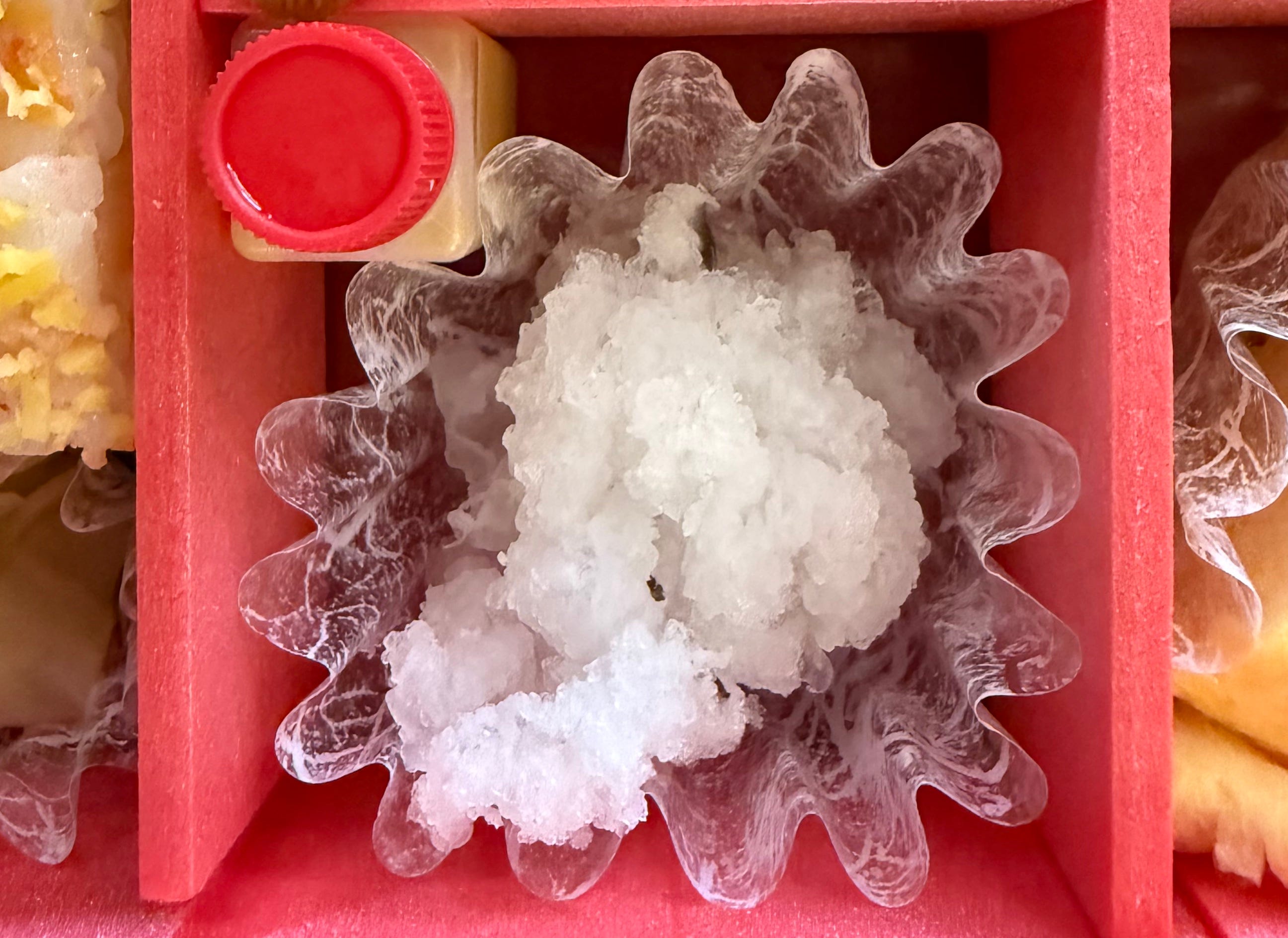
I’ve never had a specific desire to taste whale and find myself slightly nauseous at the prospect. I crack open the bento on the train and am surprised to notice my stomach clenched with dread, blood creeping into my ears. Pinched in my chopsticks, under wan fluorescent light, whale blubber is a translucent, ghostly white with a furry, pebbled texture.
I’m vaguely horrified, and stalling. Despite my best efforts at cosmopolitanery, I grew up in the United States, a place that teaches you not just to love animals but to find in them all of the positive qualities of humankind. I was born in 1988, an era awash in eco-positivity and Disneyfied morality plays that divided the animal kingdom into good guys (lions, dogs, whales) and bad (wolves, sharks, hyenas). The dominant childhood aesthetic was anthropomorphized fauna: grinning monkeys, contemplative lions, mournful giraffes, laughing dolphins, starring in cartoons or printed on lunch boxes, backpacks, cereal boxes, on posters in every classroom.
My favorite computer game as a kid, because my dad banned real games on our family PC, was a CD that let you virtually explore the San Diego Zoo. The first books I ever loved enough to reread were about talking mice. The first time I ever cried reading a book was when Old Dan and Little Ann died in Where the Red Fern Grows.
So I know that whales have the largest brains of any animal on earth and express complex emotions with vivid language; that they mourn their dead, compose songs that are shared across oceans and pass culture to their children.
Perhaps that’s why the animal-eating jokes directed at the Asian American kids drew blood. I had never eaten dogs, cats or any of the protagonist species, and nothing I had experienced visiting my family in Taiwan and China suggested that doing so was ever common practice.
To me these stories were juvenile fabrications, but humiliating anyway, when hurled like so many water balloons full of urine, and just as impossible to parry. The stereotype of being an eater of benevolent animals in an animal-loving society was dehumanizing in a way that I had no defense against. It was my first encounter with an old law of human behavior: what we eat defines who we are, but also who we are not.
Now at 37 I take a savage, perverse pleasure in eating strange things: live soft-shelled shrimp drowned in shaoxing wine and soy still twitching with vigor; stir-fried goat testicles; char-grilled chicken uterus still attached to an unlaid egg; Chinese bacon made from pork blooming with gray mold; silkworm larvae as Korean bar snacks, kangaroo luc lac, cricket tacos, fermented foods of every redolence.
I don’t eat them because they are strange, but because to someone else they are normal. I tell myself that eating this food is a way of connecting with them, but the truth is I’m reaching out to myself in these unknown flavors. I’ve lived in estrangement so long that it’s become the only place I feel at home.
New food transforms the palate into a dowsing rod. As soon as I taste it and note my body’s reaction, I feel like I have become a different person. I can’t predict how my taste buds will react. But I always listen to what they tell me, because they have no reason to lie.
The whale blubber crunches and bounces against my teeth, elastic like tripe, then cartilaginous like jellyfish salad. I keep chewing, but all I can taste is a vague, slippery blankness I can’t recognize as food.
I.
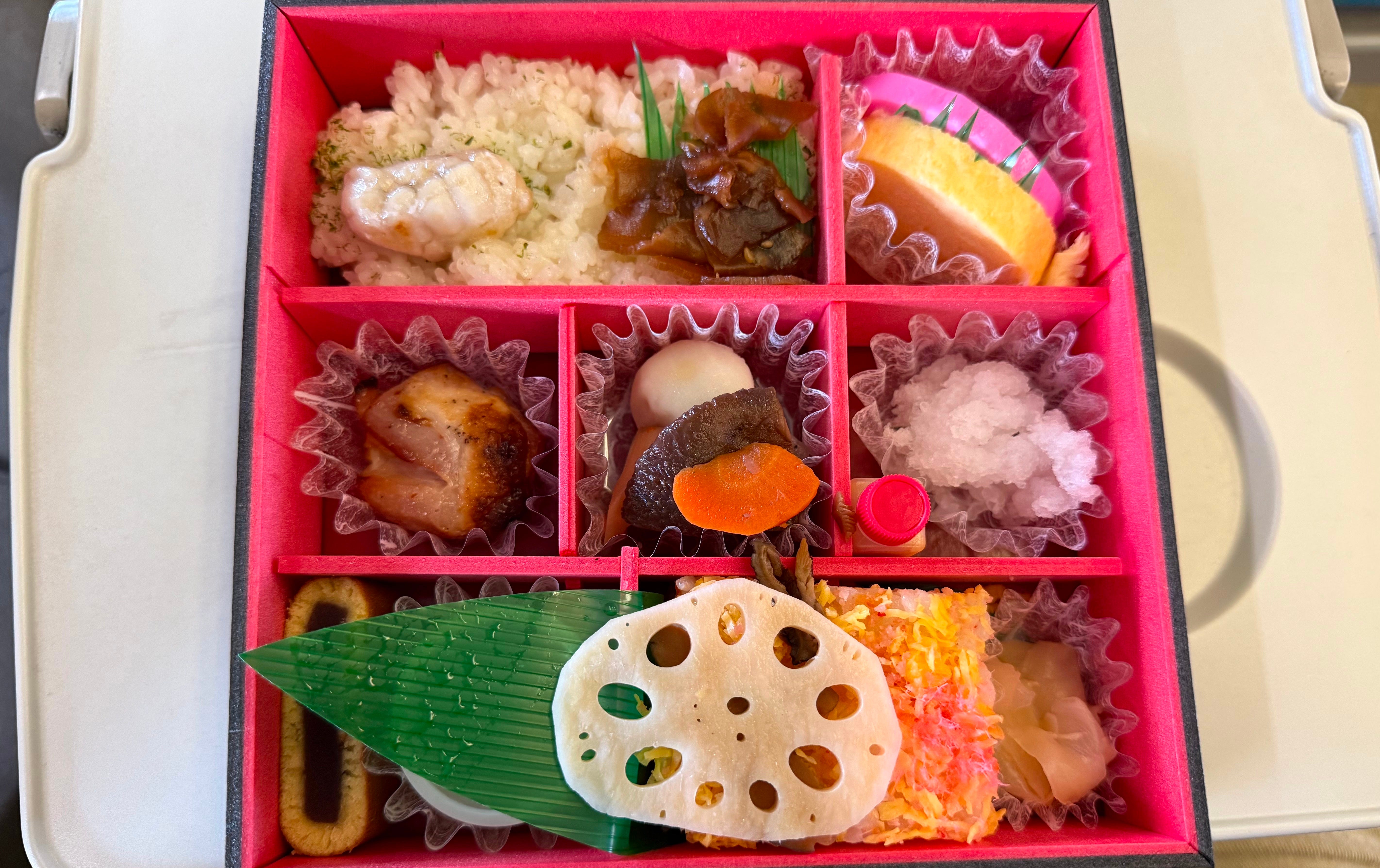
The Steam Locomotive Yamaguchi ekiben is a fairly standard bento aside from the whale, a sectioned makunouchi-style box released in 2021 to promote the relaunch of a novelty train pulled by a functioning steam engine. Nine dishes present nostalgic flavors found along the route.
Blowfish rice is from Shimonoseki. Choshu jidori chicken is native to Yamaguchi Prefecture. Senzaki kamaboko, a rustic, lumpier version of the traditional half-moon fish cake, was popularized in Nagato city. There’s a square of pressed, layered Iwakuni sushi and kanzuke, a Kumamoto-area radish pickle that’s skewered and hung in strings to cure in cold weather.
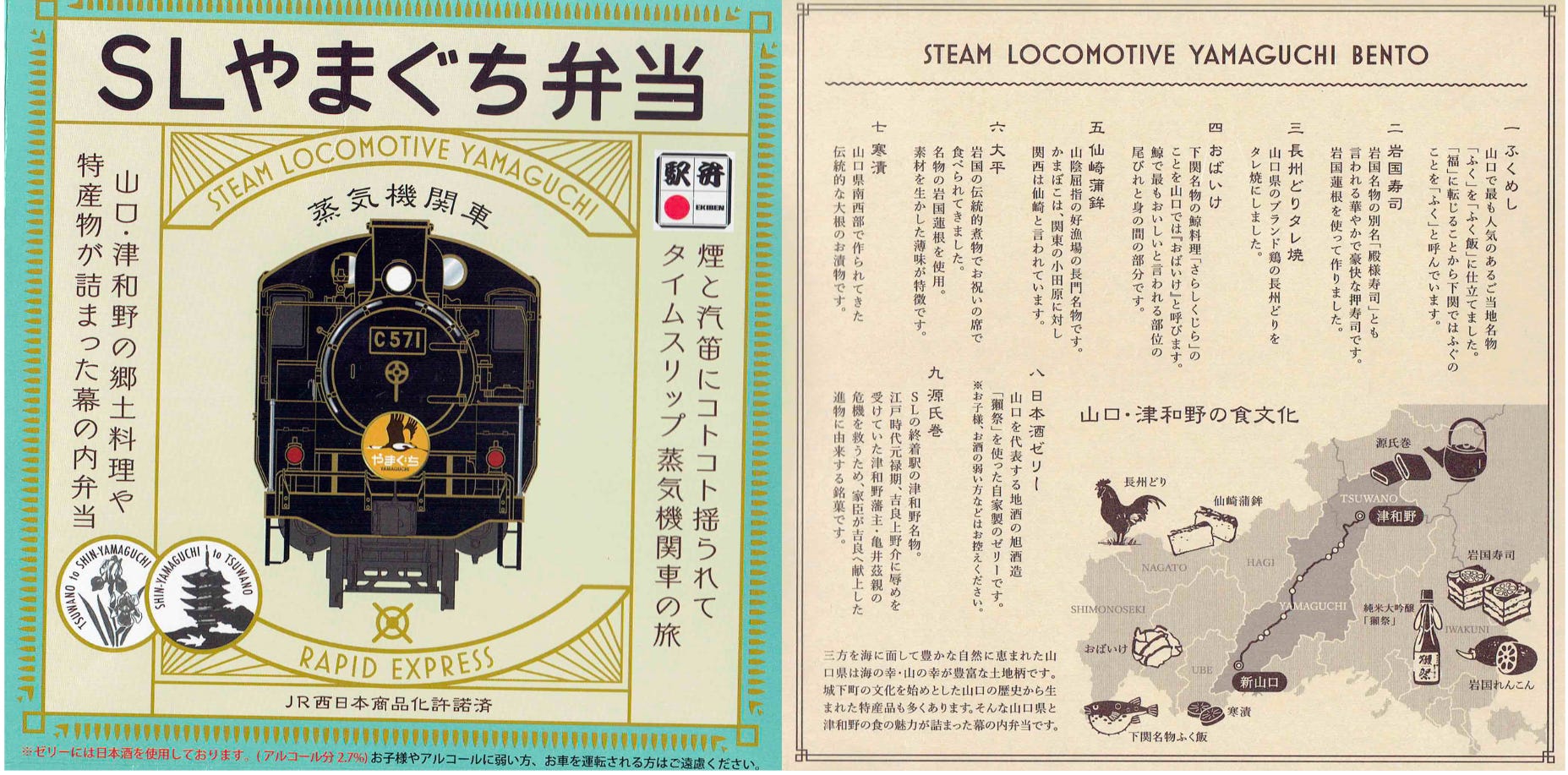
Then there’s obaike, the local term for blubber from the tail of the minke whale. The ekiben presents it with green onions and a sweet miso mustard sauce in an antique side dish called nuta.
Whale has been a part of the local diet since the 1600’s, according to the Ministry of Agriculture, Forestry and Fisheries. Shimonoseki is also home to Kyodo Senpaku, Japan’s largest whaling concern. It’s the home port of a factory whaling ship made infamous by anti-whaling activists, who pursue it across the high seas, pelting it with stink bombs in filmed confrontations broadcast on reality TV in the U.S. and U.K.
Making whale blubber palatable is a laborious task. Even after it’s sliced, salted, boiled, chilled, and rigorously scrubbed for impurities, obaike has a firm, rigid chew and an ambiguous, briny aftertaste. I began to wonder what made it worth the effort.
The Japanese government heavily subsidizes the modern whaling industry and officials are unusually tolerant of the global outrage it provokes. Former prime minister Shinzo Abe repeatedly defended it as an ancient Japanese tradition. Officials emphasize that they hunt species of whale that are not endangered, and some have even decried western criticism of the practice as racism and xenophobia.
In a country of 126 million with an economy in the hundreds of trillions, “the fact that an industry that employs at most a couple hundred people can command such political resources is rather fascinating,” said Nathan Hopson, a Bergen University professor researching the subject.
In much of Japan there’s no history of whaling, and the vast majority of people don’t consume the meat, Hopson said. Whale entered the Japanese diet in recent history, as a food of necessity in the years after World War II, accounting for nearly half of all protein consumed in 1947.
Demand has all but disappeared. A 2024 survey by the Japan Wildlife Conservation Society found that just 7 percent of respondents had consumed whale meat in the past year.
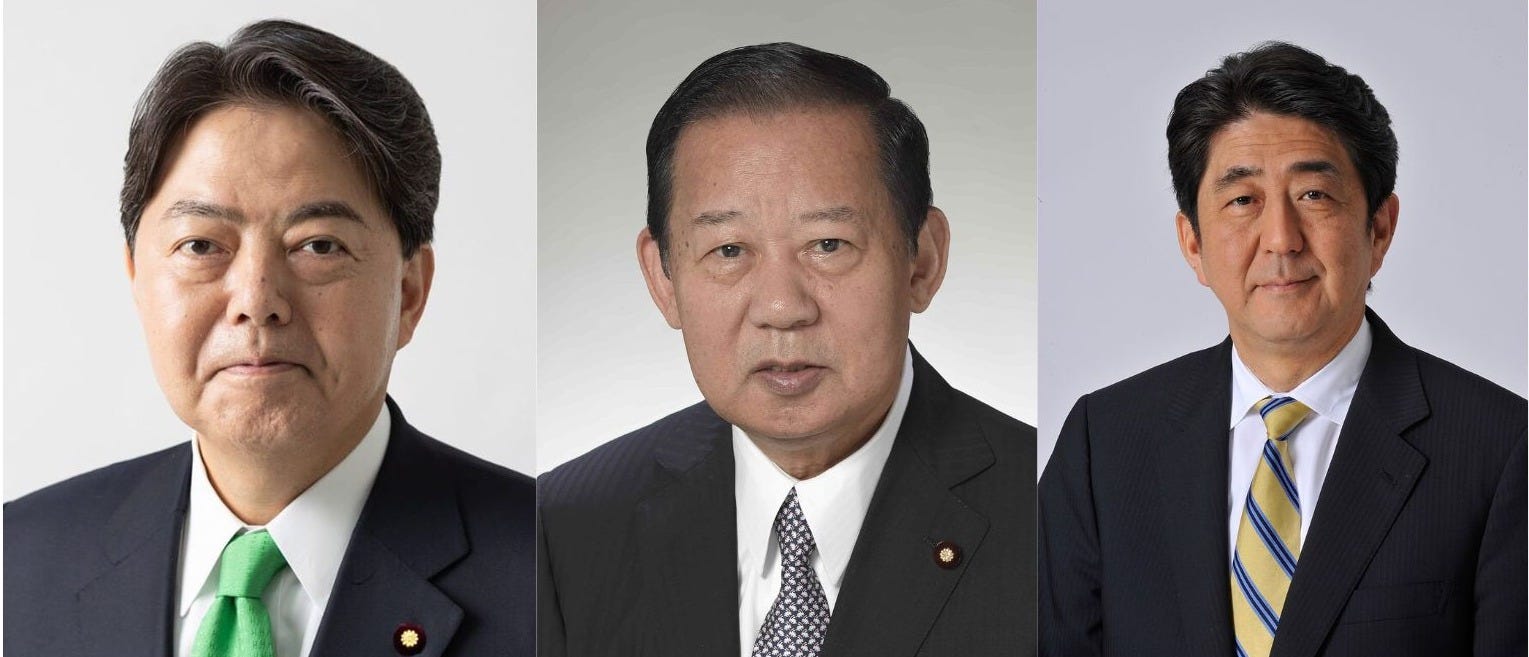
The modern industry, experts say, largely owes its existence to a triumvirate of politicians with ties to historic whaling regions who shape policy at the highest levels of Japan’s dominant Liberal Democratic Party.
Both Abe, who died by assassination in 2022, and his chief cabinet secretary Yoshimasa Hayashi hail from Shimonoseki. Senior LDP leader and secretary general Toshihiro Nikai was born in Wakayama and represented the city of Taiji, home to the dolphin and whale hunt criticized in the infamous, Oscar-winning 2009 documentary “The Cove.”
The trio’s political dominance of the issue was so unshakeable that observers have named them the “Iron Triangle” of Japanese whaling policy. (Colorful nicknames abound in Japanese politics - Nikai is called the “Shadow Shogun” for his ability to exert hidden influence).
Is whaling essential to Japan’s national history? Worth the mounting price in subsidies, negative publicity and political tension with western allies? Or is it a heritage particular to the places featured in the SL-Yamaguchi ekiben, a pet project of the Iron Triangle?
It’s a question that looms large over the whaling industry with Abe dead and Nikai retired, Hopson said. Answering it requires parsing both real and imagined history.
II.
The most lasting stories we tell about food are of hunger. Starvation activates the circuits for obsession and compulsion in the brain. Hunger bends ego, morality and the passage of time around it. Famine survivors describe gripping, vivid dreams of food, the mind hallucinating the sustenance the body still craves, years after trauma has passed.
And studies have found that starvation affects not just those who’ve experienced it, but also the bodies and the minds of their children. Suffering encodes itself in the epigenetic memory of cells and can contribute to higher rates of obesity, depression, heart disease and high blood pressure in later generations.
Perhaps this is why I can’t seem to place the flavor of obaike, and why a lot of westerners might not appreciate what whale meat means to a generation of Japanese people.
But I was born to a Taiwanese family one generation removed from poverty and food insecurity. So here is what I’ve witnessed of hunger.
Hunger is a vengeful ghost so terrifying that even the suggestion, its shape, must be erased from the routines of daily life. Uneaten food, wasteful habits, and upright chopsticks could trigger another haunting, because hunger can never be quelled, only appeased. Eating becomes a trauma response, an attempt to fend off the memory of starvation.
Hunger makes you an unrepentant menace at an all-you-can-eat buffet, that diner who takes all the sushi, shrimps, scallops and steaks as soon as they come out. Hunger makes you cook too much food and cry over the waste. Hunger makes you eat alone over the trash can, joylessly absorbing the calories from days-old food you can’t throw away. In Chinese mythology, hunger manifests as egui, a demon with an insatiable appetite, distended belly and a tiny mouth, to symbolize eternal asatiety.
You never wanted me to know hunger. But did you know I was eating to ease the pangs of your regret? I heard you in the kitchen late at night, your words muffled but the low hum of distress unmistakeable, punctuated by the slap of leftovers against the plastic lining the trash can. I’ve tasted it in mayo and pork floss sandwiches, cabbage omelettes and Japanese curry with dried tofu wheels and coconut milk, to make the roux last. I’ve found the forgotten stashes of airline peanuts, ketchup packets and plastic to-go containers in our cupboards and drawers.
Hunger means you don’t understand why I’m writing this, why I spend my hours over a keyboard instead of earning money with the degree you helped pay for. And when I scrape my own wasted leftovers into the trash, shame and anger tightening the muscles in my neck, I realize that hunger lives in me too.
Sometimes I don’t know if we are trying to appease the egui or if we have become them.
But I can also see that hunger sharpened your will to live. It gave you quick feet during a crisis and taught you to stand up for yourself. And your memories of overcoming hunger become trophies, fond talismans of the time you faced down fate. They became our recipes.
A society’s struggles with hunger are recorded in food. And in Japan, researchers have found potent associations between whales and famine in both western and eastern regions dating back to 1600’s.
Fishermen from the Kii peninsula, encompassing parts of Nara, Wakayama and Mie prefectures, hunted cetaceans with spear and net, following migrating pods throughout the Japanese archipelago. Whale meat entered their diet via natural strandings and beachings, according to the book “The Gods of the Sea,” a historical analysis of Japanese whaling by Fynn Holm, a Japanese Studies professor at Tuebingen University.
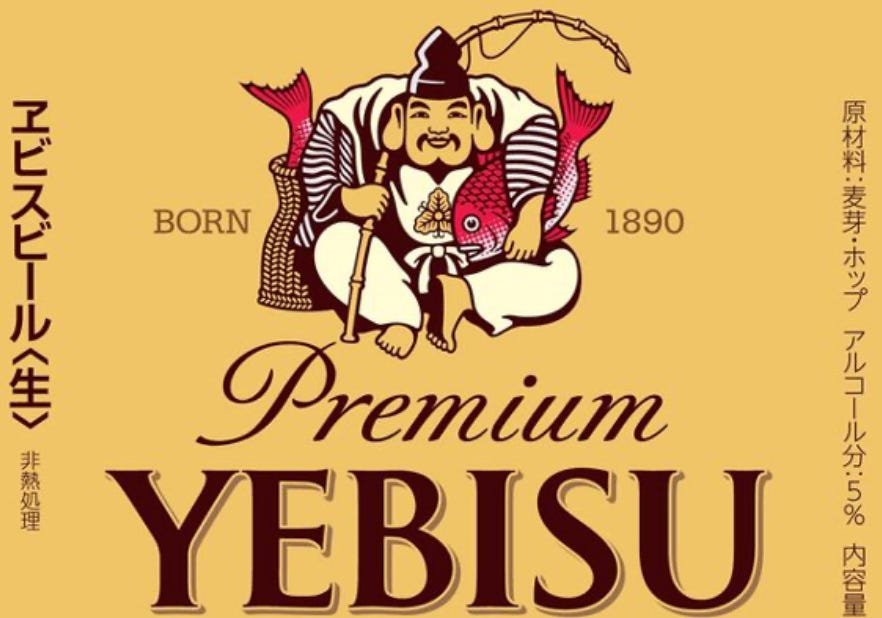
By contrast, the fishermen of northeastern Japan believed whales were an incarnation of Ebisu, a god associated with good fortunes, plentiful catches and safe harbors. This version of Ebisu was a fat, boneless and limbless man who finds a home with the Ainu people after he’s abandoned at sea by his parents, the creation deities Izanagi and Izanami. These days he serves as the mascot of Yebisu beer.
These beliefs were rooted in long observation: hunting whales herded sardines and bonito into shallow coves, gifting villages with easy catches.
Northwestern fishermen believed killing whales brought curses upon the villages of those responsible. Their rites were designed to appease the angry souls of hunted cetaceans, Holm found. When imperial authorities hired whalers from southern Japan to establish a port in Hachinohe, local fishermen took up arms and set fire to the facility.
These superstitions also had scientific origins. Whale carcasses could feed and enrich entire villages, but overwhelmed coastal ecosystems with excessive biomass. The waste from slaughtering facilities harmed shellfish populations, smothered the seaweed harvest and killed off other important sources of food.
Whales played another role in dispelling famine, according to Holm’s research. Their oil was an essential component of a crop repellent that was the era’s only tool for combatting leafhopper swarms that had devastated harvests across Japan.
By the early 1900’s, officials were promoting whaling as a method of enhancing food security and economic competitiveness. Whaling had become “inextricably linked to the founding myth of the emerging Japanese empire,” Holm writes. Asserting fisheries rights was a backhanded way of extending regional influence. Industrialized whaling methods imported from the United States and Norway fueled a massive expansion of the industry. An estimated 2.9 million large whales were killed worldwide between 1900 and 1999, driving blue, fin, right and sperm whale species to the brink of extinction.
This association between Japan’s national strength and the health of its whaling industry only deepened even after World War II. U.S. occupation forces endorsed industrial whaling to provide the populace with cheap protein. Whalers became patriotic breadwinners, symbolizing food independence for a starving country dependent on U.S. food aid, Hopson said.
This was the era in which the members of the Iron Triangle of whaling came of age. Nikai, the Shadow Shogun, was a boy during this age of war and starvation. Abe was born in 1954, the year that elementary and middle school lunches across the nation began to serve whale. Yoshimasa was born in 1961, a year in which whale accounted for nearly half of all animal protein consumed in Japan.
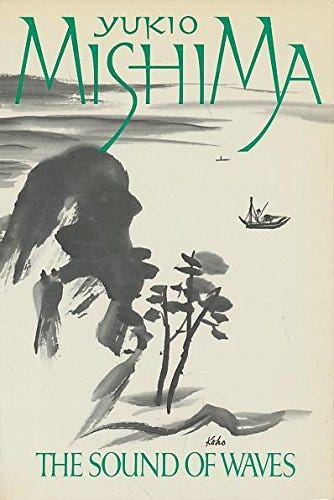
Living in the wreckage of postwar Japan made many nostalgic for a simpler life. In 1954’s The Sound of the Waves, Yukio Mishima, one of Japan’s most famous and controversial authors and an ultra-nationalist who committed seppuku after a failed coup, wrote:
“The sea was the place where he earned his living, a rippling field where, instead of waving heads of rice or wheat, the white and formless harvest of waves was forever swaying above the unrelieved blueness of a sensitive and yielding soil.”
Whaling appeals to Japan’s conservative politicians today for the same reason coal is championed by American Republicans. To an older generation, the industry symbolizes self-reliance and a return to lost glory for a nation humiliated by World War II. The Iron Triangle’s support of whaling had personal and pragmatic dimensions. The issue evokes potent historical memories of hunger and trauma, and investing in remote whaling facilities allowed the LDP to cater to an important rural voting base.
Most Japanese people will likely never be interested in eating whale. But a growing number of them have ample reason to decry American influence, especially as the dollar’s relative strength against the yen draws an unprecedented wave of western tourists to Japan. And U.S. anti-whaling activists have long supplied them with ammunition.
III.
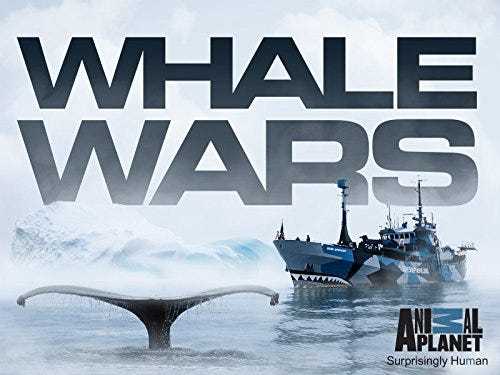
Before Logan Paul and a swarm of Western content creators descended upon Japan, there was “Whale Wars”, a 2008 reality TV show in which anti-whaling activists confront the Japanese whaling trade on the high seas. The show was an immediate hit, running for 7 seasons on Animal Planet and the Discovery Channel. It was described by The New York Times as “a singular blend of reality show, war documentary and the Three Stooges.”
Cameras follow a boat crew fielded by the Sea Shepherd Conservation Society as they attempt to sabotage the Japanese whaling trade. It’s a lot of tough talk into radios strung together with canned confessional interviews and narration. When they find the ship, one guy rattles off a diatribe through a loudspeaker, usually in English. Then they try to ram the ship, or they hurl glass bottles filled with stinking butyric acid and slime the whaling ship’s deck with cellulose powder. Some volunteers, upon witnessing a factory of cetacean death, find themselves weeping.
“The Cove” came out just a year later, following a group of activists, led by the dolphin trainer from the TV show “Flipper,” who go rogue to capture footage of the yearly dolphin hunt in Taiji, Japan. The film employs the same aggressive, guerilla-style filming and dehumanizing stereotypes of Japanese people that Youtubers are castigated for today, but back in the permissive year of 2009 earned an Oscar. They lie to authorities to secure filming permission, shout protest slogans in English to people who cannot understand, and sneak around in night vision goggles.
Rewatching it in 2025, I can’t help but find myself siding with the indefatigably polite local officials, the Asians getting harassed for eating weird stuff.
One of the film’s last scenes is a dramatic time-lapse. Flippers’ regretful former trainer stands in the middle of the Shibuya scramble holding an iPad playing footage of the dolphin hunt. It’s intended to emphasize the Japanese people’s indifference to the hunt’s brutality. It ends up a visual metaphor for how the film creates the image of a heroic activist at the expense of actual conversation.
I can convince myself, with some effort, that these spectacles of anguish and righteous indignation come from an authentic place. But history shows America lacks the standing to approach the Japanese whaling industry from a position of outraged moral condemnation.
“Whale Wars” never mentions that the American whaling empire was once the most destructive of all, the first to industrialize the practice, at one point accounting for two-thirds of all whaling ships worldwide. Nor do the activists ever make a serious attempt to confront the whaling industry in Norway, which formally objected to the treaty and resumed commercial whaling six years after it took effect.
It’s hard to imagine any Japanese people or policy makers being convinced by the posturing, self-aggrandizing activism in “Whale Wars” and “the Cove.” Then there’s the unacknowledged xenophobia - in one “The Cove” scene, an activist describes a series of Japanese-built fishing facilities in the Pacific Islands as a “neon-lit whorehouse.”
For decades, this strident activism clashed with Japanese nationalist conservatism to disastrous effect at the biennial meeting of the International Whaling Commission in Cambridge.
By 2018, the commission had devolved into an “annual donnybrook” over the question of commercial whaling, said Patrick Ramage, former manager of the whale program at the International Fund for Animal Wildlife
“Every year each nation would put the armor on and come out swinging on a set of positions that had at this point become very familiar,” Ramage said.
The Japanese delegation had grown tired of debate. They were planning to pack the IWC’s voting body with smaller nations, who pledged support in exchange for new fishing facilities. The strategy was to sabotage the commission by revising the bylaws to require a three-quarters rather than a simple majority for some votes, Ramage said.
Japan had only agreed to the moratorium because the United States pressured them against lodging a formal objection. In 1989, the year after the ban took effect, they repainted their ships and continued whaling under a clause in the treaty that allowed nations to issue themselves hunting permits for scientific purposes.
A 2010 International Court of Justice ruling found that the Institute for Cetacean Research released just two internationally peer-reviewed scientific papers since its founding in 1988, despite hunting and killing thousands of whales. A group of scientific observers, including 3 Nobel winners, protested in a joint letter published in the New York Times, questioning whether research required such large-scale slaughter, noting that meat from the whales was also packaged and distributed for sale.
Fisheries officials argued that killing whales was necessary because they consumed vast amounts of fish and harmed fisheries stocks. Whales, once divine life-bringers, had become 'cockroaches of the sea,' as one of Japan’s top IWC negotiators called them; not allies but enemies in the endless war against scarcity. Whale meat once represented an end to hunger. Now it accumulates, unsold, in strategic food stockpiles. Some of it is used to make pet food.
Japan left the IWC in 2018 and resumed commercial whaling a year later, joining with Norway and Iceland as the last three commercial whaling countries in the world. And in May of 2024, the Kangei Maru departed Shimonoseki for it’s maiden voyage. It’s a brand new 47 million-dollar factory whaling ship, the first new whaling vessel to set sail in 70 years.
Months later, I still can’t decide how obaike tastes, and the memory is starting to fade, despite my best efforts to record it.
I remember forcing myself to chew and swallow slowly, without much enjoyment. But the flavors, sensations and smells flicker and shape-shift in my memories. Sometimes it is slick and metallic like engine oil; or it is bitter and sulfurous, like fresh loss.
Then it’s salty and rich, like tears, or the ocean; until it’s almost completely blank, like cold glass or stainless steel, like ghosts.
I learned a lot of historical and cultural context of whaling in Japan from reading this, so thank you for writing this up! Seems like the people who made "Whale Wars" and "The Cove" should've learned this history too, but the vibe I get from people who jump straight into that type of aggressive posturing and action outside US borders--despite agreeing with their position against whaling--is that they're more interested in fulfilling a white savior complex than actually solving the problem that they claim to engage in. And the xenophobia and left out context about American whaling you wrote about seems to satisfy my suspicions. I live in Connecticut, a state whose history is tied to whaling, and was even out there proclaiming that history openly with the Hartford Whalers in the NHL (even though most of the whaling took place about an hour south of Hartford along the Connecticut Shoreline; great logo, though), so "Whale Wars" omitting that information is so disingenuous.
I don't think I can stomach the texture you described for obaike, as much as I'm curious about what it would taste like for me. I winced when I read "furry, pebbled texture".